Maintenance
Efflorescence (White Salt Deposits): Causes & Fixes
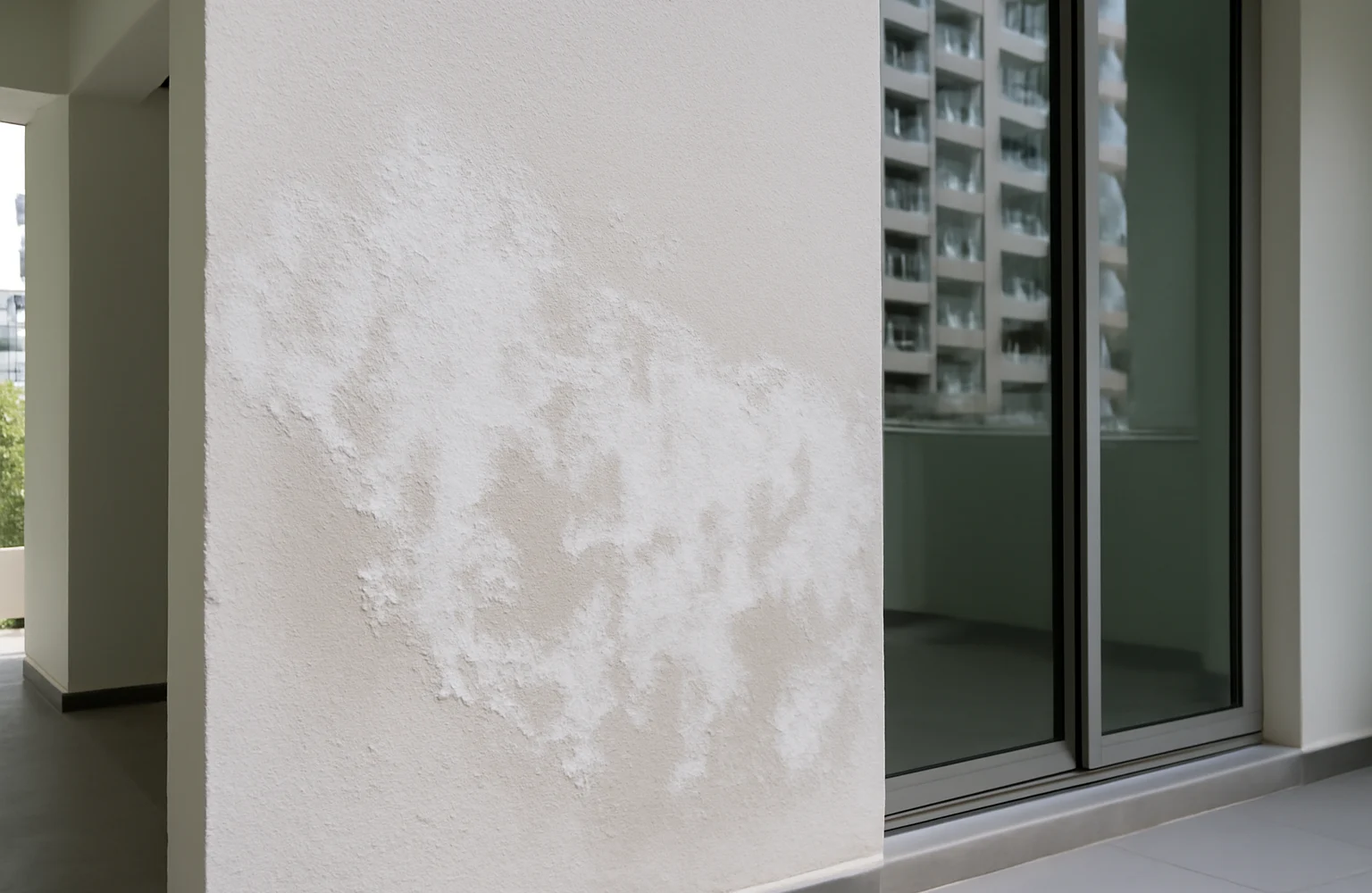
Those chalky white, crystalline deposits appearing on walls, tiles or grout are efflorescence — salts left behind as moisture moves through masonry. They’re a symptom, not just a cosmetic issue. Here’s what to know.
Key takeaways
- Efflorescence = white salt deposits left by moisture moving through masonry.
- It signals a moisture problem behind the surface.
- Wiping it off treats the symptom, not the cause.
- The lasting fix addresses the water source.
What it is and why it appears
As moisture travels through concrete, brick or grout, it dissolves natural salts and carries them to the surface, where the water evaporates and leaves the salts behind as a white, powdery bloom. It’s common at grout lines, tile edges and damp walls — and it means water is present.
A symptom, not the problem
You can brush or wash efflorescence off, but if the moisture continues, it comes back. It often accompanies wall seepage or failed waterproofing — the real issue to fix.
Treating it properly
The lasting solution is to find and stop the moisture source, let the area dry, then clean off the deposits and reinstate the finish. Only then does it stay away.
Frequently asked questions
What is efflorescence? White salt deposits left on masonry as moisture moves through and evaporates.
Is efflorescence a problem? It’s a sign of a moisture issue behind the surface — worth investigating.
Can I just wipe it off? You can, but it returns unless the moisture source is fixed.
What causes the moisture? Often seepage or failed waterproofing — the underlying issue to treat.
Seeing white deposits?
We diagnose the moisture behind efflorescence and fix it. See our waterproofing service. Get a free assessment.