Renovation
Elderly-Friendly Bathroom Design in Singapore
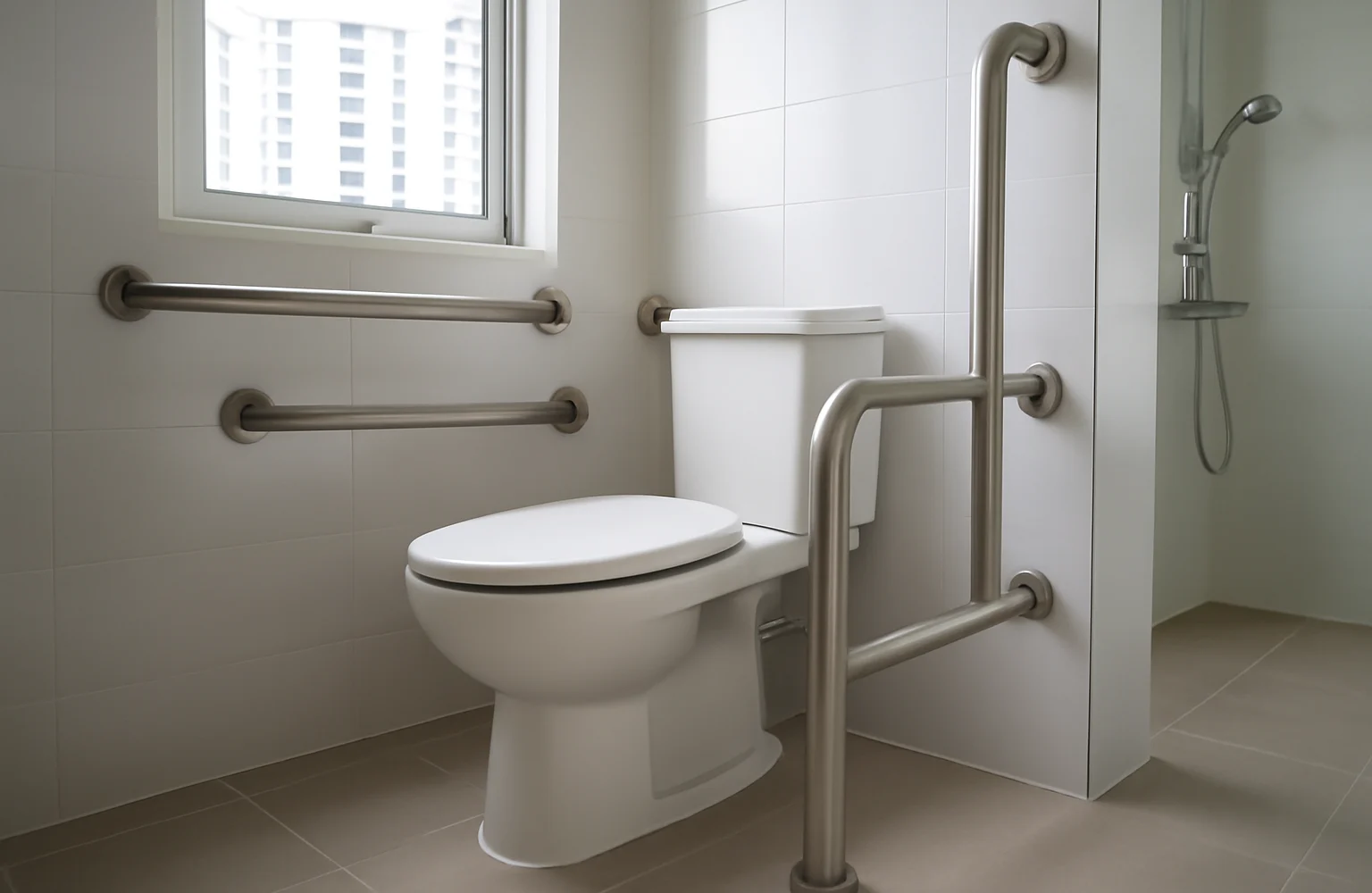
Bathrooms are the highest-risk room for falls at home — wet, hard and full of transitions. A few thoughtful changes make a bathroom far safer for seniors while still looking good. Here’s how.
Key takeaways
- Bathrooms are where most home falls happen — small changes have big impact.
- Key features: grab bars, anti-slip floors, a level/low-threshold shower, a shower seat.
- Good lighting and reachable controls help too.
- HDB’s EASE programme supports some elderly-friendly works.
The core safety features
A safer bathroom combines: grab bars at the shower and toilet; anti-slip flooring or treatment; a level-entry or low-threshold shower (no high kerb to step over); and a fold-down shower seat for those who can’t stand long. Together these address the main fall risks.
Comfort and usability
Small details help daily: lever taps that are easy on stiff hands, a higher/comfort-height WC, controls and storage within easy reach, and bright, even lighting with no dark corners. The aim is independence with dignity.
Doing it properly
An elderly-friendly bathroom is still a wet-area renovation, so sound waterproofing, correct drainage falls (no pooling) and good ventilation remain essential. HDB’s EASE programme may support some of these improvements for eligible households.
Frequently asked questions
What makes a bathroom elderly-friendly? Grab bars, anti-slip floors, a low-threshold shower, a shower seat, good lighting and reachable controls.
Why focus on the bathroom? It’s where most home falls happen, so safety changes have the biggest impact.
Do I need to remove the shower kerb? A level or low-threshold entry reduces trip and step risk — a common upgrade.
Is there support for these works? HDB’s EASE programme supports some elderly-friendly improvements for eligible flats.
Designing a safer bathroom?
We design and build elderly-friendly bathrooms with proper waterproofing. See our home renovation service and waterproofing service. Book a consultation.